
Call Us: +1 (847) 719-5900
Crest-to-Crest® Wave Springs
Crest-to-Crest Wave Springs are pre-stacked in series, decreasing the spring rate proportionally to the number of turns. Uses are typically applications requiring low-medium spring rates and large deflections with low-medium forces.
Among the major advantages, this design eliminates the need to keep the wave crests aligned. The need to use a key locating device, or to insert a shim between individual springs is not necessary. Because the spring is integrally formed, the wave peaks hold their configuration.
As a replacement for helical compression springs, Crest-to-Crest Springs can develop similar forces, yet occupy one-half (1/2) or less the axial space. This allows for strict space constraints. Crest-to-Crest Wave Springs will maintain the same force and load specifications of a conventional round wire spring, but with the advantages of resultant lowered and compacted operating heights, free heights and solid heights.
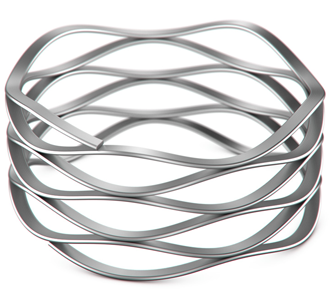
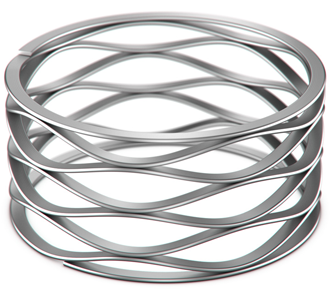
Crest-to-Crest Wave Spring Crest-to-Crest Wave Spring with Shim Ends
(C and CM Series) (CS and CMS Series)

Stock Sizes
Smalley offers 4 different series from stock, with over 4,000 springs to select from:
- C Series
- Inch series available from .188" to 2" in carbon and stainless steel
- CS Series
- Inch shim end series available from .312" to 2" in carbon and stainless steel
- CM Series
- Metric series available from 5 mm to 60 mm in carbon and stainless steel
- CMS Series
- Metric shim end series available from 8 mm to 60 mm in carbon and stainless steel
Request Samples
Request free samples of any of our standard parts to test in your application.

Additional Information
Wave Spring Advantages

Learn About Crest-to-Crest Wave Springs

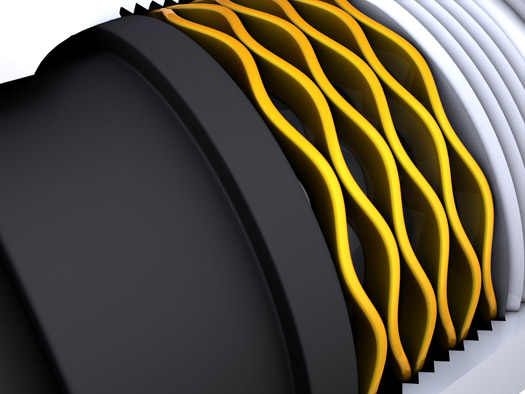

Flow Valve Application
As fluid pressure increases the Crest-to-Crest Wave Spring precisely controls the linear displacement of the piston, which positions the orifice for proper fluid flow.
Quick Product Search
Need Help?
Call Us:
+1 (847) 719-5900
General Inquiries
info@smalley.com
Sales
sales@smalley.com
Careers
Join Our Team

© 2026 Smalley. All Rights Reserved.
Connect With Us